The Auction Calendar Is a Strategic Variable: Timing the Global Art Market with Greater Precision
In the global art market, the decisive question is not only what to buy or sell, but when, where, and under which conditions to participate. VERTU’s Auction Liaison approach brings calendar intelligence, provenance discipline, and discreet coordination to the auction decision.
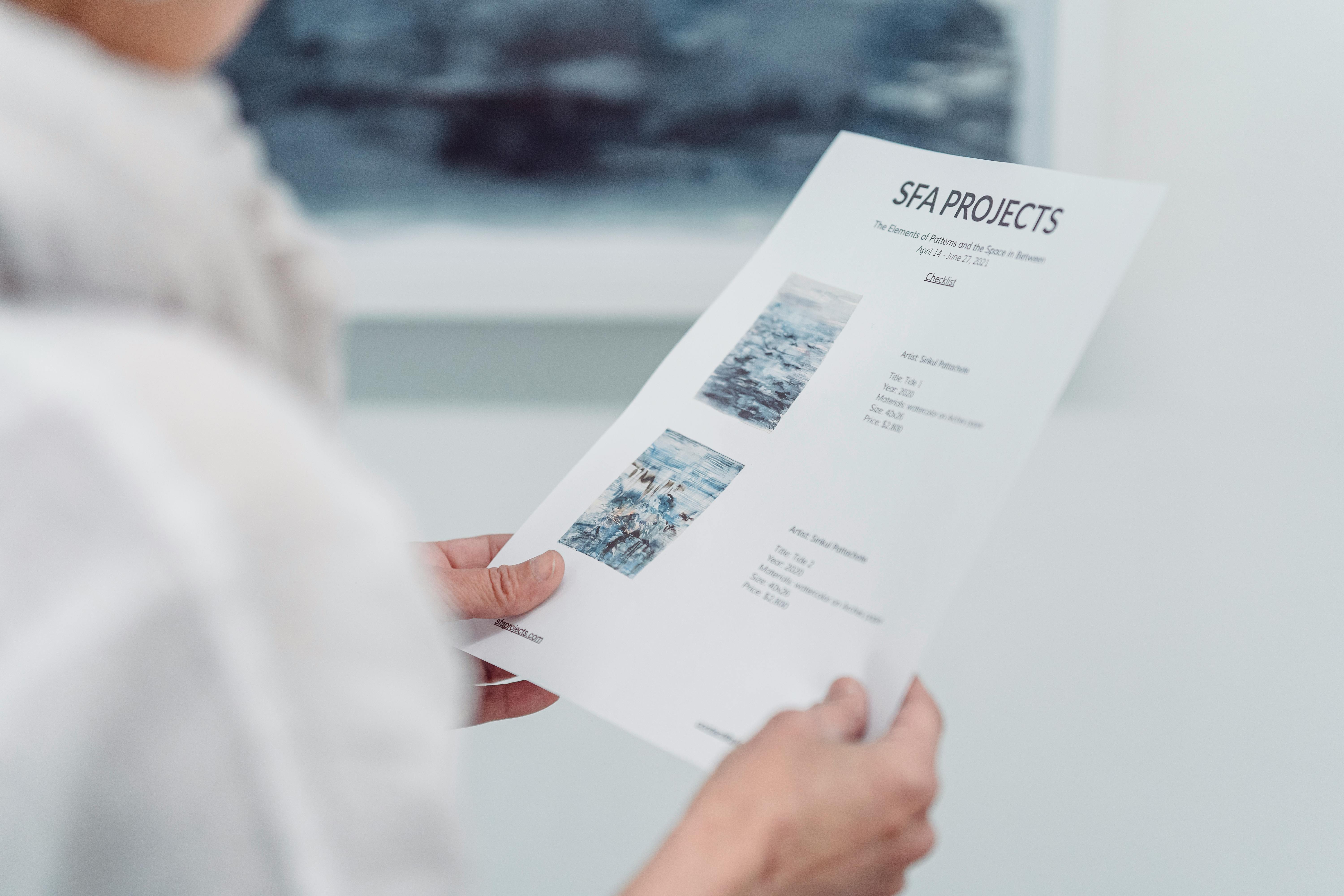
In the art market, attention often gathers around the lot itself: the artist, the estimate, the catalogue image, the room, the final bid. Yet for a collector, family office, or internationally active enterprise, the more consequential decision may happen earlier. It is the decision about when to enter the market, through which channel, and with what degree of preparation.
An auction is not an isolated event. It is a timed market environment shaped by the quality of the catalogue, the depth of expected demand, the condition and provenance of the work, the bidding format, the location of the sale, and the practical requirements that follow a successful bid. A disciplined participation strategy therefore begins before the auction calendar becomes urgent.
This is the territory of an Auction Liaison. Rather than presenting art as a simple transaction, VERTU England positions Art Auction as a discreet enterprise growth and governance advisory for clients seeking seamless and strategic participation in the global art market.
The market does not begin when the bidding starts
Established auction platforms illustrate how much work sits behind a successful sale. Heritage Auctions advises first-time consignors to prepare storage, inventory, descriptions, records, and condition-related information before consigning, while also distinguishing between auction and direct-sale routes. Its selling guidance further directs clients toward valuation resources, past auction archives, expert conversations, and different routes to market.
These are not merely administrative steps. They show that market participation is built from a sequence of decisions, each of which can affect the quality of the next one. An incomplete description may distort expectations. A missing ownership record may slow review. An unsuitable sale date may reduce the strategic value of exposure. A work that appears compelling in isolation may be less suitable when considered alongside a client's existing collection, liquidity plans, or cross-border timetable.
The implication is simple: the auction calendar should be read as intelligence, not as a list of appointments.
Timing is a form of discretion
For high-value clients, discretion does not mean avoiding the market. It means deciding how visible, how immediate, and how coordinated participation should be. A client may need to compare several upcoming sales before committing to one. They may wish to separate acquisition activity from disposal activity. They may need time to review shipping, insurance, payment, import, or collection arrangements. In other cases, the right decision may be to wait.
The most premium form of auction support is therefore not constant activity. It is well-judged selectivity.
A useful pre-auction review can be organised around four questions:
| Decision area | Strategic question | Why it matters |
|---|---|---|
| Object | Does the work fit the client's collecting or enterprise objective? | Prevents the lot from being treated as an isolated impulse purchase. |
| Timing | Is this sale the right moment, or simply the next available moment? | Separates market opportunity from calendar pressure. |
| Evidence | Are provenance, condition, comparables, and terms sufficiently understood? | Reduces avoidable uncertainty before a bid or consignment decision. |
| Execution | Can bidding, payment, transport, storage, and documentation be coordinated across jurisdictions? | Protects continuity after the auction room has closed. |
The table is not a substitute for specialist appraisal, legal advice, tax advice, or the auction house's own conditions of sale. It is a decision framework for identifying where specialist input is required and where a client's wider priorities need to be brought into the conversation.
From auction house access to market participation architecture
Auction houses naturally concentrate on their own operating strengths. Heritage Auctions presents a broad collectibles marketplace with research archives, specialist guidance, consigning options, and routes for both auction and outright sale. Alex Cooper combines real estate, fine art, jewellery, antiques, décor, estate services, and online bidding within a regional-to-global marketplace model.
DuMouchelles emphasises fine art, jewellery, and estate collections, with specialist evaluation, cataloguing, previews, online bidding, absentee bidding, and in-person participation.
Each model answers an important market need. The role of an Auction Liaison is different. It is to help the client translate access into a coherent course of action across providers, categories, locations, and timelines.
That may include identifying the relevant sale environment, organising the questions to be asked, clarifying which documents deserve attention, structuring a bid mandate, coordinating communication with specialists, or maintaining a clean record of decisions. Where the client is considering a sale, the same discipline can help distinguish between an auction strategy, a private route, a staged release, or a decision to retain the work.
This is especially relevant when art is connected to a wider enterprise context. A collection may sit within a family's long-term planning. A purchase may form part of a hospitality, design, or cultural strategy. A sale may coincide with a relocation, restructuring, inheritance, or change in collecting direction. In each case, the artwork is still an artwork - but the decision around it may carry operational and governance consequences.
The value of a calm bid
A bid should be the conclusion of preparation, not a substitute for it. Before participation, the client should understand the work's stated condition, the provenance information made available, the applicable buyer's terms, the cost structure, the currency exposure, and the practical route from successful purchase to secure possession. Similar historical results can inform research, but they do not guarantee an outcome; even small differences in condition, attribution, rarity, timing, or demand can materially change a result.
A calm bid is not necessarily a conservative bid. It is a bid made with a defined purpose, a pre-agreed ceiling, and a clear understanding of what happens next. It preserves the client's ability to participate decisively without allowing the atmosphere of the room - or the speed of an online sale - to define the decision.
For a consignor, the equivalent is a calm release. It means entering the market with a realistic view of the object's evidence, the appropriate audience, the sale schedule, and the settlement process. DuMouchelles, for example, describes a full-service process that moves from evaluation and positioning to cataloguing, global presentation, settlement reporting, and payment. The lesson is not to copy one house's process, but to recognise the importance of continuity across the entire journey.
A more deliberate role for luxury service
Luxury service is often mistaken for speed, exclusivity, or access. In a complex market, its more durable expression is clarity under pressure. The client should know which decision is being made, which facts support it, which assumptions remain open, and which specialist should own the next step.
VERTU's Art Auction service is designed around that principle. As an Auction Liaison, VERTU England can serve as a discreet coordinating layer for clients who want their market participation to be more seamless, more strategic, and more aligned with the way they manage other high-value decisions. The emphasis is not on promising a particular price or outcome. It is on improving the quality of preparation, communication, and execution around the opportunity.
The most useful question is therefore not simply, "Which lot should we pursue?" It is: "What would make this participation coherent with the client's broader direction?"
That question changes the rhythm of the auction. It creates room for research before urgency, context before enthusiasm, and coordination before commitment. In a global market where the next sale is always visible, the ability to wait for the right moment may be the most refined form of participation.
Closing perspective
The global art market rewards knowledge, but knowledge alone is not always enough. The decisive advantage may lie in how information is arranged: how a sale is compared with another, how provenance is brought into the decision, how logistics are anticipated, and how a bid or consignment is connected to the client's wider priorities.
The auction calendar is therefore more than a timetable. It is a strategic instrument. Used well, it allows clients to move through the market with greater precision, stronger optionality, and less unnecessary noise.
VERTU England Art Auction - Auction Liaison for seamless and strategic participation in the global art market.